July Diary: Between Languages
14 July 2026
Dear friends,
I am writing this from Poland.
Every summer I return here for at least two weeks, to my mother’s house, where I have temporarily set up my studio before diving into a busy August of painting. It is not the place where I grew up—that was a modest apartment in a socialist housing estate in Warsaw—but being here still pulls me gently towards earlier chapters of my life.
What surprises me most each time is not the landscape, nor the food, nor even the familiar flowers blooming in the garden.
It is the language.
Speaking Polish feels almost embarrassingly intimate. There are no translations happening somewhere in the back of my mind, no searching for the right expression, no simplifying a sentence before I begin speaking. I notice that I become a slightly different version of myself. Perhaps more precise. More playful. Certainly quicker.
German, English, and now my still very kindergarten Portuguese each reveal different facets of who I am. Polish, however, remains the language that knows me before I have even finished the sentence.
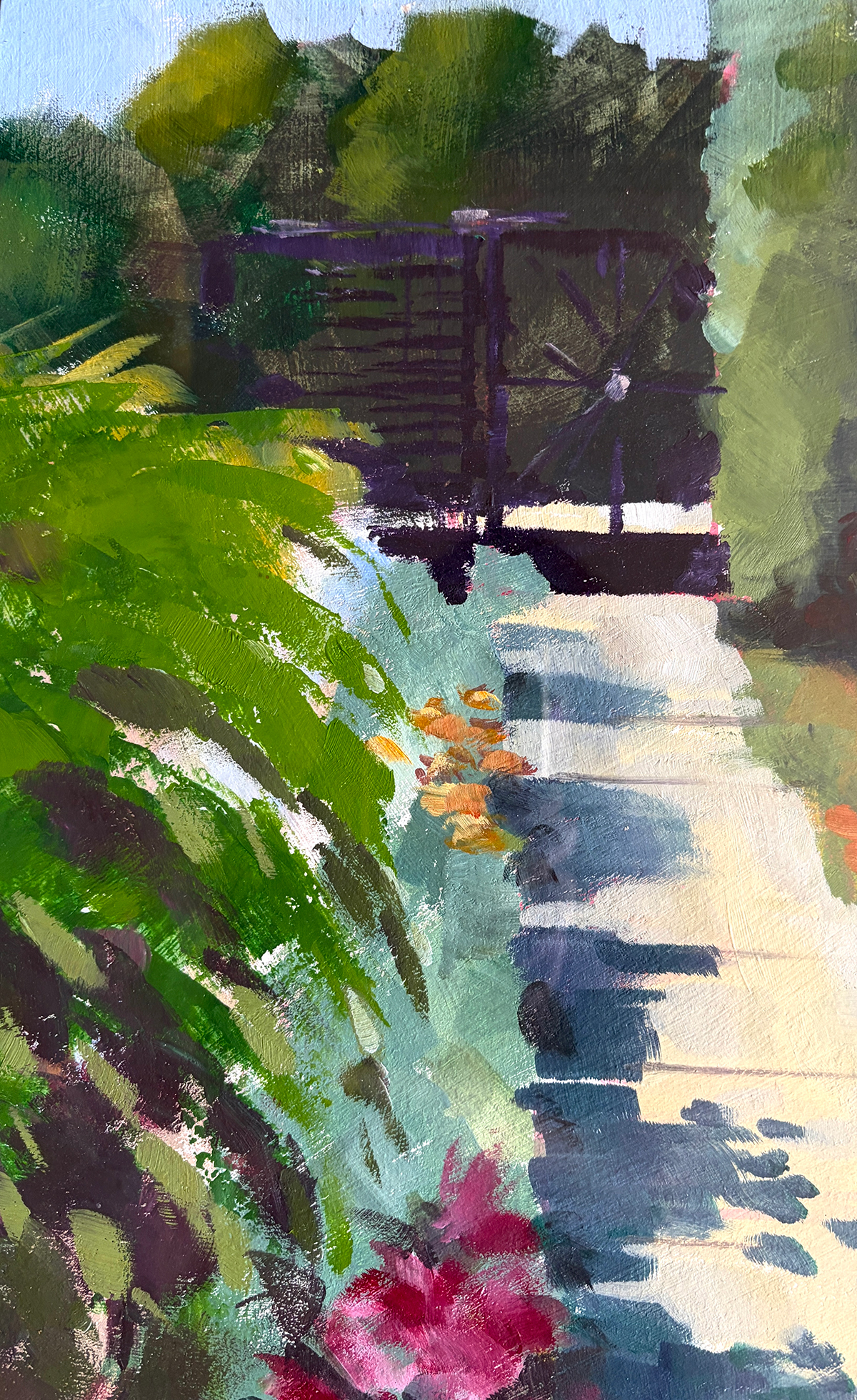
The path in my mom’s garden, painted by me three years ago. My mom has moved here five years ago, in the age of 87. The neighbour house once belonged to my grandfather, after my uncle and aunt took over.
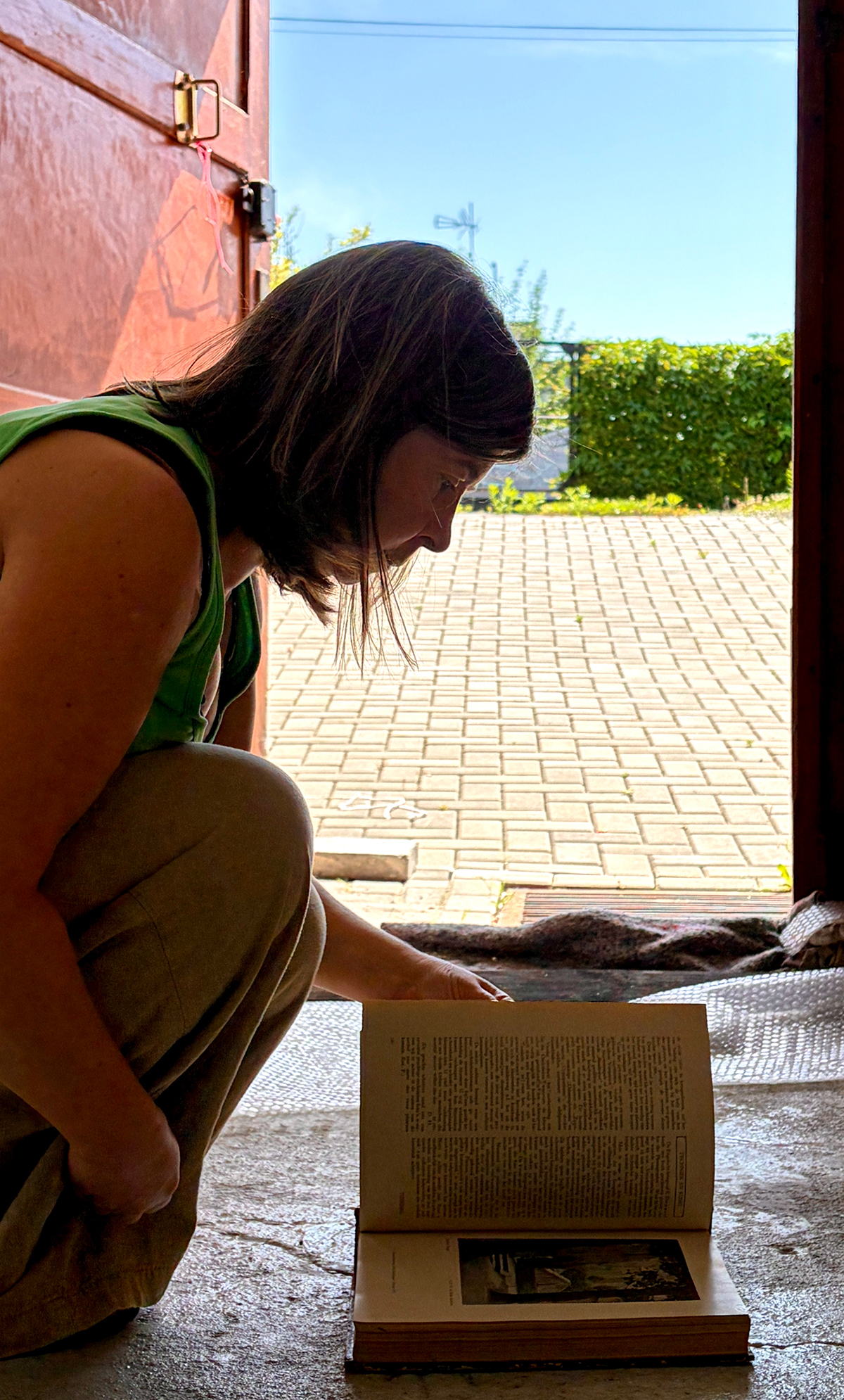
Living between languages has become such a normal part of my life that I rarely stop to think about it. Only when I return here do I notice how many somersaults my brain performs in order to stay just a little outside my linguistic comfort zone. Yet I have also come to believe that this effort has quietly shaped me as an artist.
When words become less available, observation grows stronger.
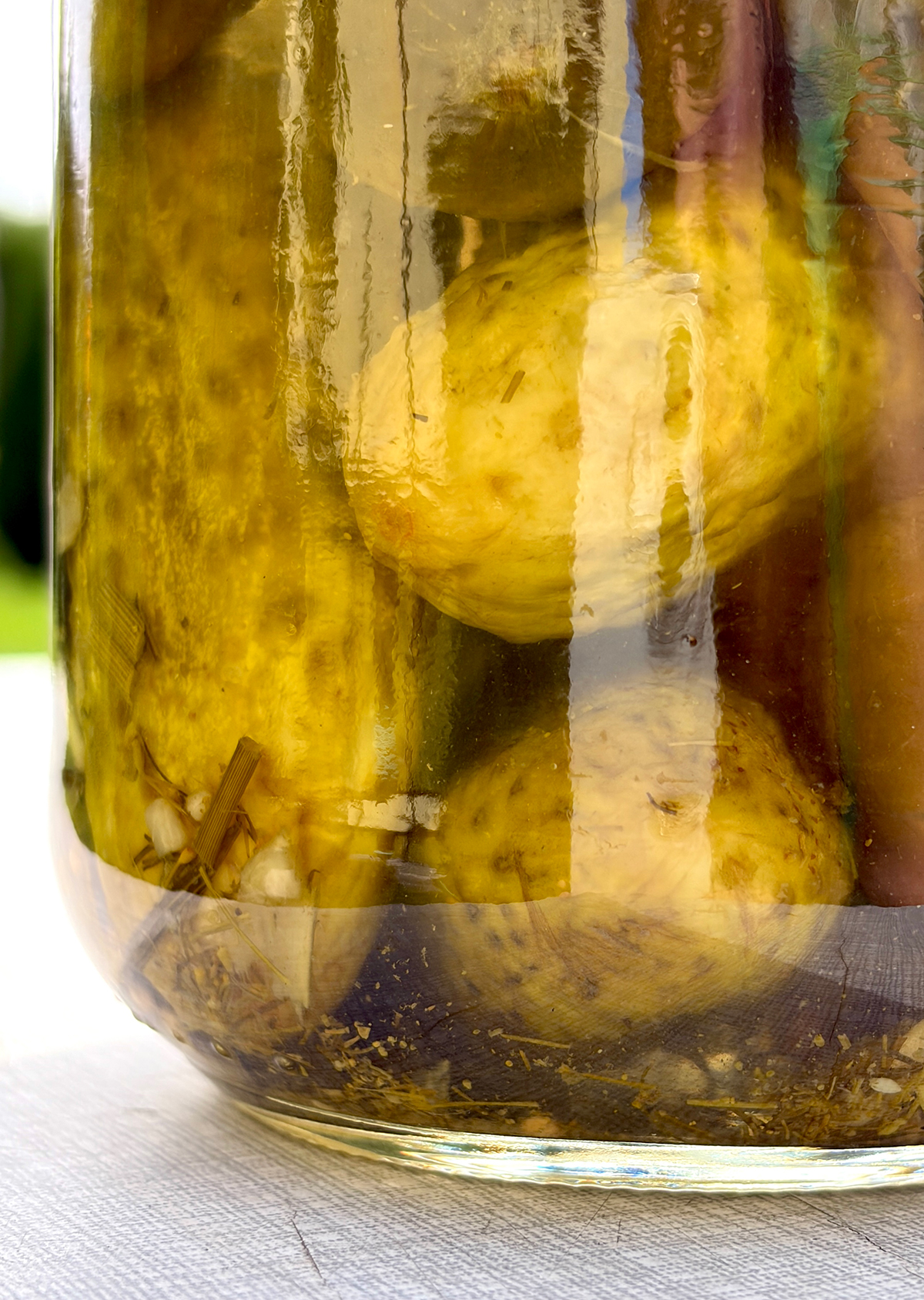
Okay, regarding Polish food I have one (or maybe two or three) sweet – actually sour! – spots: the conserved cucumbers. Nowhere they taste as good as here! 🙂
In visual matters I rely more on colours than narratives, in personal contacts rather on feeling and intuition than conversations, on light, rhythm and atmosphere instead of perfectly chosen vocabulary. Painting has become another language altogether—one that, fortunately, requires no translation.
Perhaps that is why I have always felt strangely comfortable stepping into unfamiliar places.
I seem to have spent much of my adult life pushing open doors into new realities, curious to see what might lie behind them. Returning to places filled with memories sometimes feels almost more unsettling than arriving somewhere entirely new. The familiarity carries its own weight. Dust-covered objects, old habits, forgotten versions of oneself—they quietly ask whether they still belong to me.
This week, while looking for something entirely different in a cupboard in my mother’s cellar, I opened an old drawer. Inside were handmade stories I had written and illustrated as a child.
Seeing them made me smile.
I was the youngest by quite a margin. My sister was already ten years older, my cousins older still, and both my parents worked full time. Keeping myself occupied became second nature.
Once a week, my afternoon excursion was the local library. I came home balancing as many books as my arms could carry. Between those borrowed worlds and piles of drawing paper, I quietly invented my own. Stories with illustrations, handmade books, maps of imaginary places.
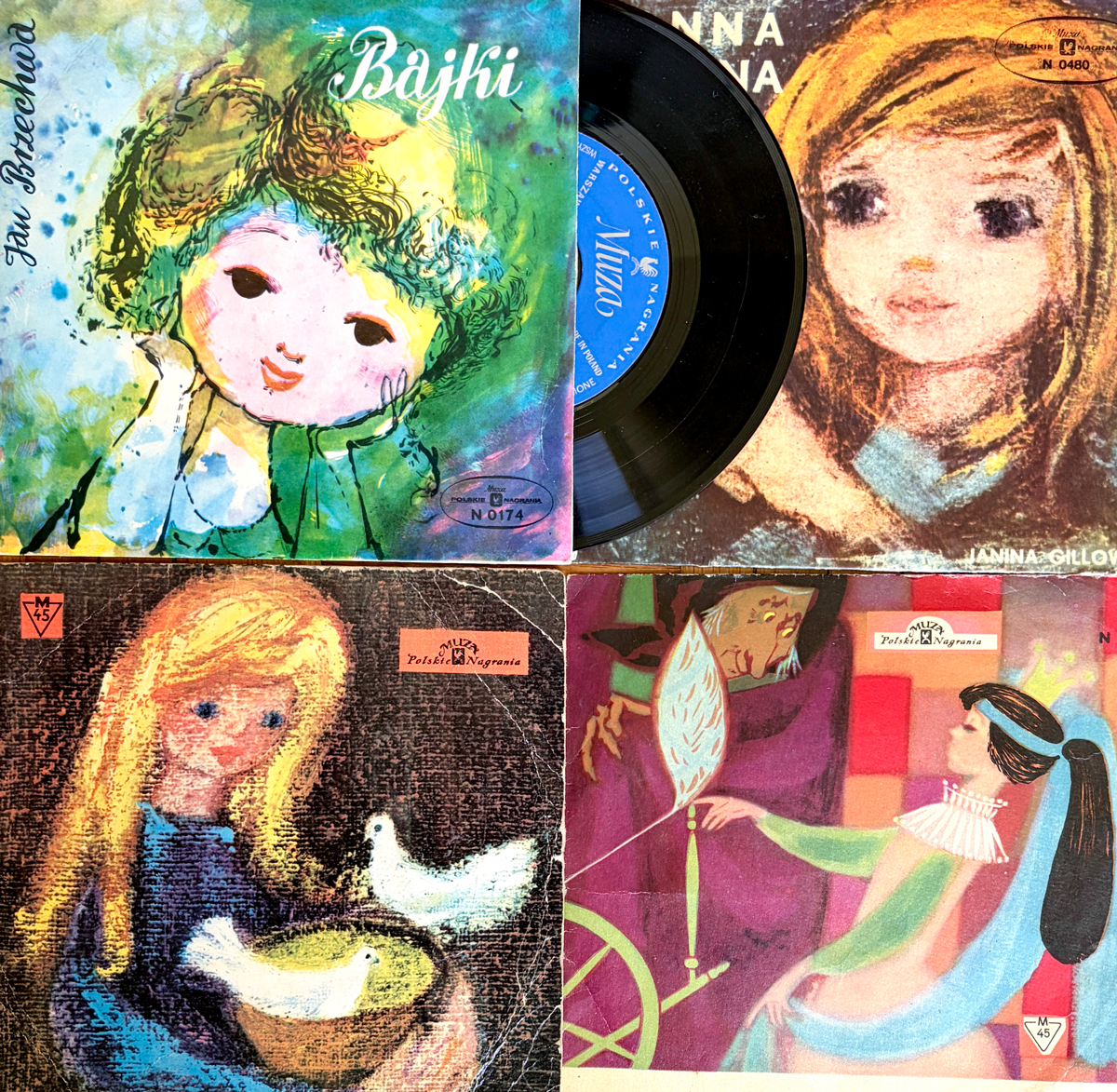
Four records from my childhood collection – I do remember switching all the lights in my room and listening to the stories!
Being here has also brought me unexpectedly close to my father again.
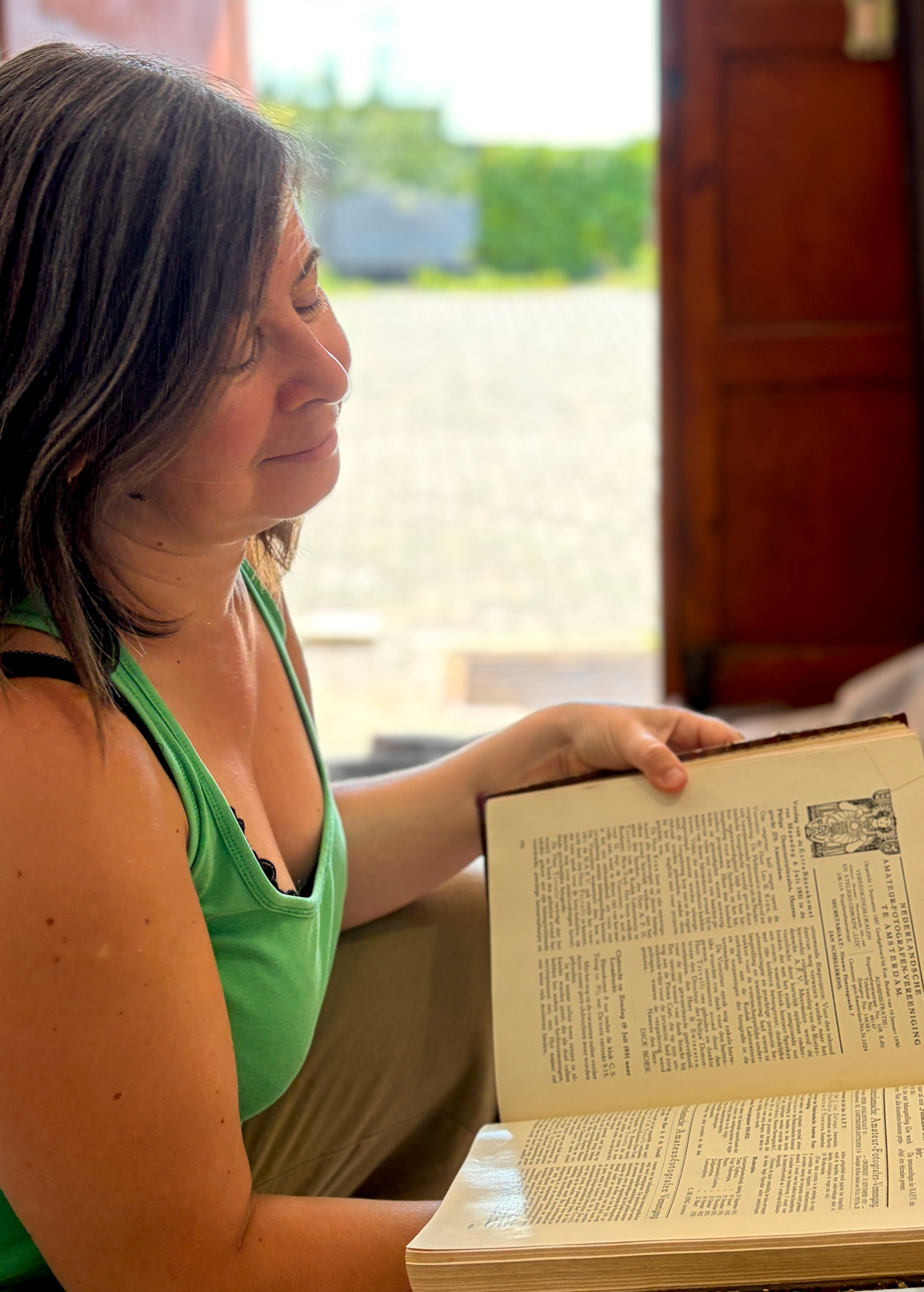
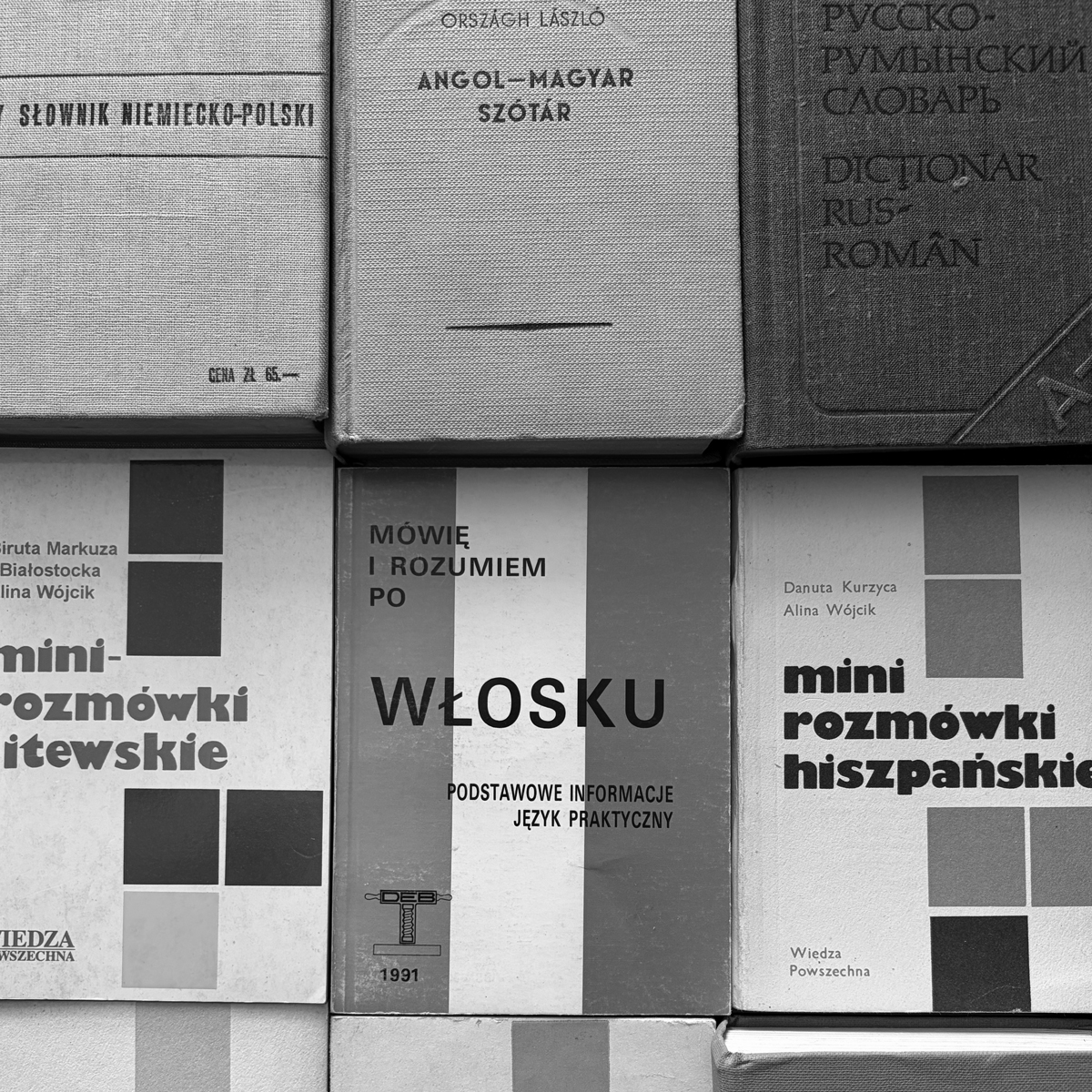
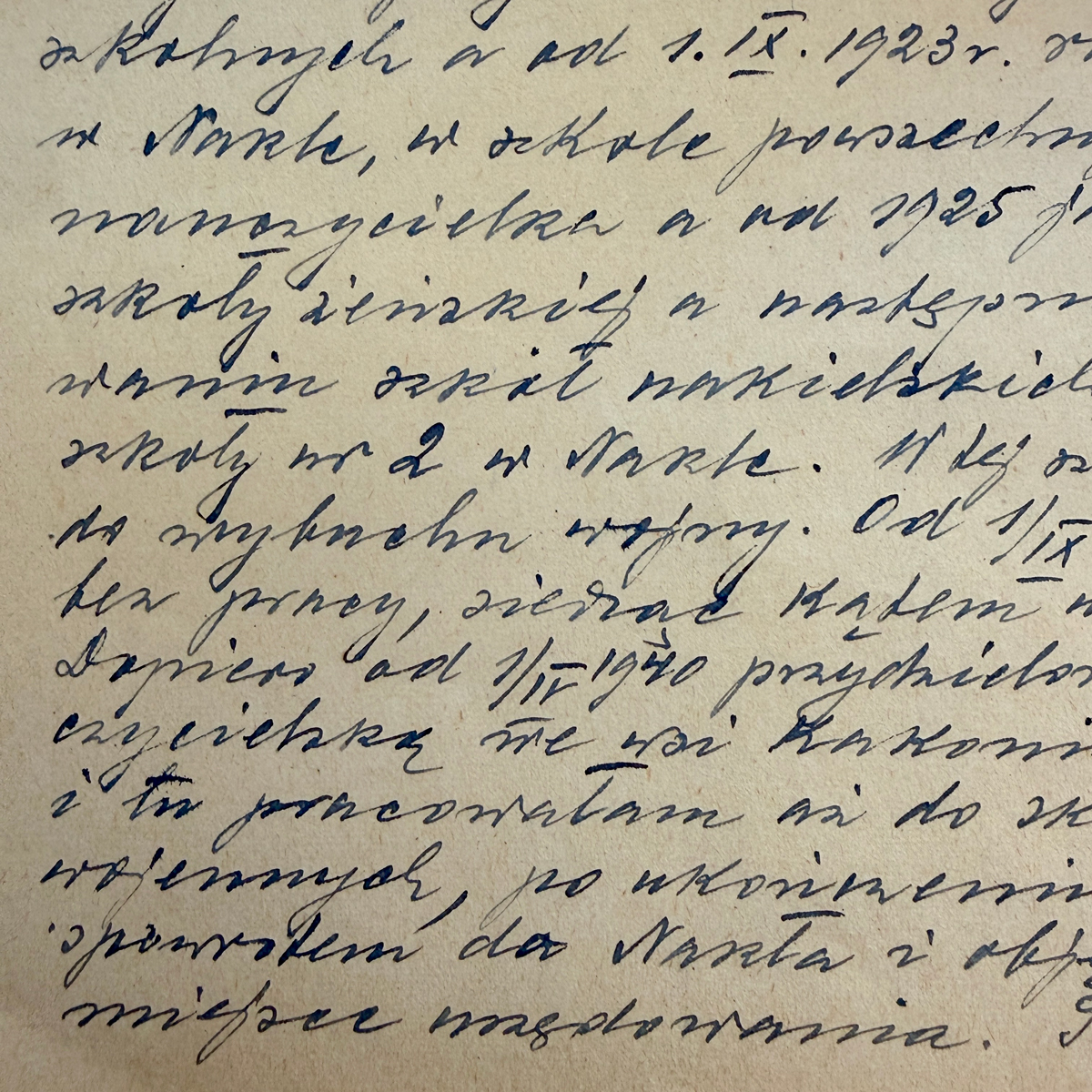
I keep stumbling upon his notebooks, dictionaries and language manuals. My father collected languages the way some people collect stamps. Seven in total, all self-taught. Books, vinyl records, cassette tapes.
I still remember him sitting in our tiny “library room”, patiently repeating Hungarian phrases aloud.
Looking back, I think languages were one of his ways of travelling beyond the borders of the world he happened to inhabit.
He belonged to a generation shaped by post-war socialism. He understood that reality definitely better than he liked it. Learning another language became a form of freedom.
Sometimes I wonder what he would make of my own life now. I suspect he would immediately ask how my Portuguese is progressing. Then he would probably study railway connections all the way from Warsaw to Faro.
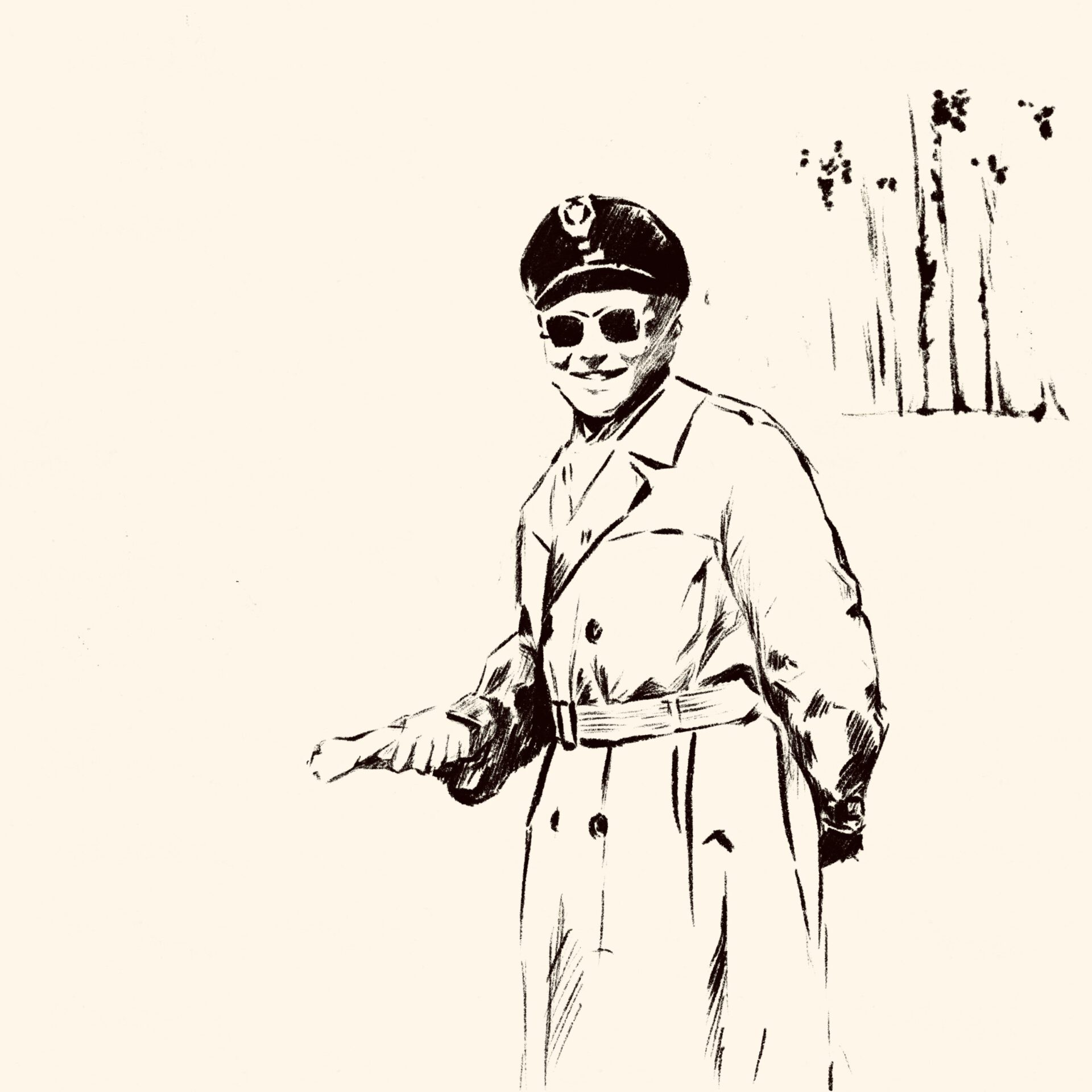
This drawing of my dad I made after he has passed away, using a photograph from 1958 as a reference. Usually posing with rather serious face, here he looked quite happy – I assume my mom took the picture!
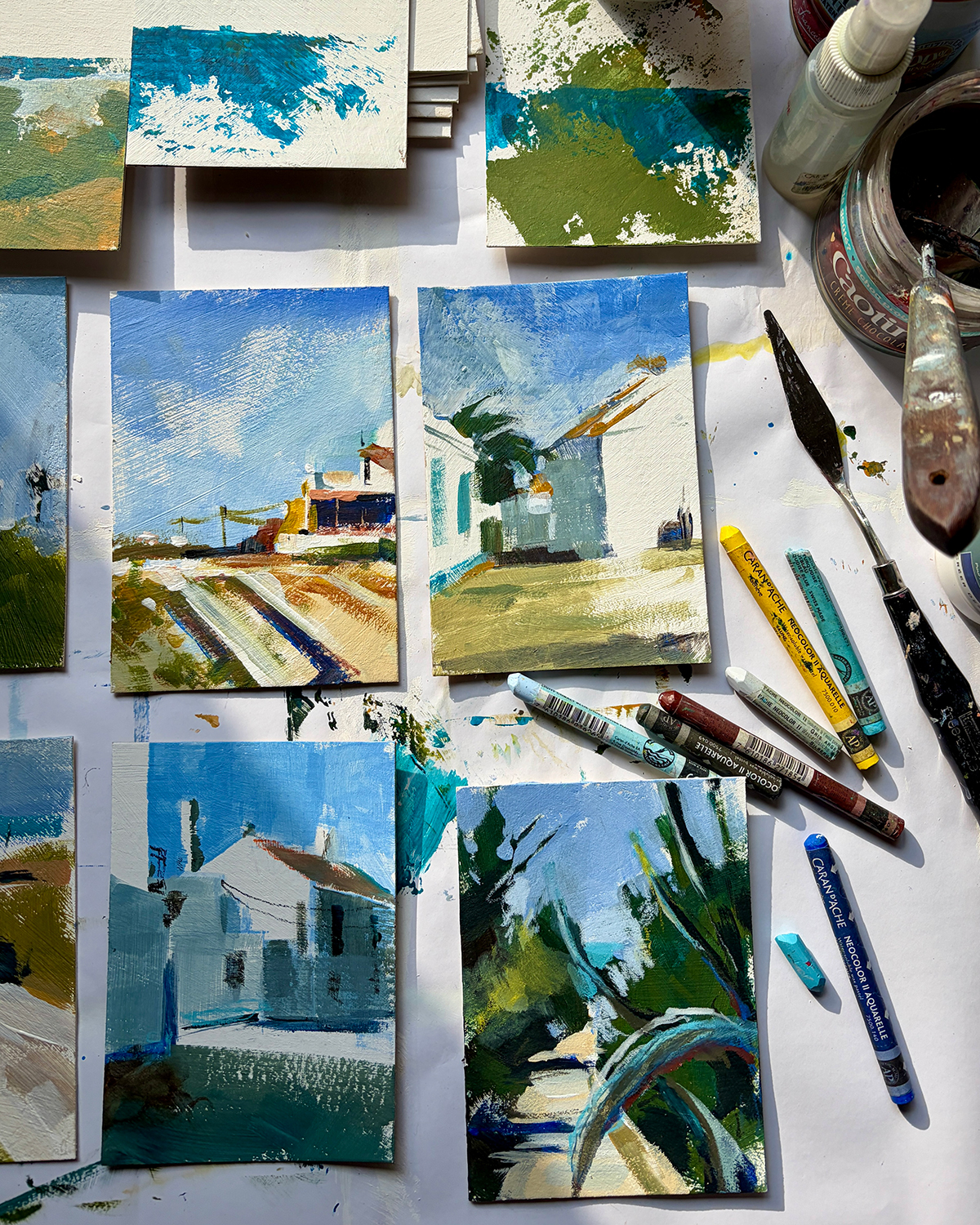
These thoughts have accompanied me while the garage at my mother’s house slowly fills with small paintings. They are studies. A search for compositions, colours and light before larger canvases take over in August.
In early September I am presenting the full series:
Fio de Luz, a solo exhibition in the house where Zeca Afonso once stayed, tucked inside Faro’s Cidade Velha.
It still feels slightly surreal.
Only a year and a half ago I spent January wandering those streets with my field easel, painting one small scene after another during my 30 Days of Faro project. I could not have imagined then that those walks would quietly become the beginning of something much larger.
Studies for the FIO DE LUZ series. A very useful way to test the planed project in context of colour palette and the compatibility as a whole.
Looking back, I realise that perhaps nothing we truly observe is ever lost.
Places remain with us.
Languages remain with us.
Paintings do, too.
Conversations, books, memories, old drawings hidden in forgotten drawers—they all continue to work somewhere beneath the surface, patiently waiting for their moment to reappear.
Perhaps paintings are simply another way of remembering.
Or perhaps they are another language altogether.
Either way, I feel grateful for both the roots that continue to nourish me and the curiosity that keeps pulling me towards new horizons.
Warm wishes,
Graży